Monthly Archives: July 2026

Simple Water Features for Small Spaces

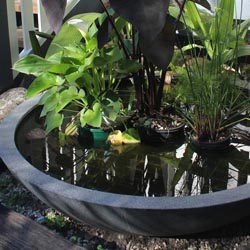
A simple water feature can make a large impact even in small spaces. The addition of a container water garden will transform, beautify and diversify your existing garden into an oasis that brings relief during the dog days of summer and beyond. Sit back, relax and enjoy the melodious sound of dancing water from your garden pond, and it will provide soothing, background music to your summer retreat. Bring wildlife into the garden by incorporating fish, frogs and snails into your mini aquascape. A simple water feature may be placed in the garden, on a deck, patio or porch or even added to a rooftop garden for a tremendous impact in a tiny space.

Choosing a Container

Container water gardens can be created from practically anything that has the capability of holding water or supporting a liner. Ceramic sinks or tubs, half-barrels, buckets, pottery or planters and troughs can all be used to create beautiful ponds. Remember, these features will look their best when the shape and materials are similar in style to that of your home and surrounding gardens.

Lining Your Container

If you have chosen a whiskey barrel or other similar wood container, follow these simple instructions to incorporate a liner to waterproof the container.

  1. Center your flexible liner over the whiskey barrel or other container. Push down in the center so excess material is evenly spaced over the outside lip. Begin folding the liner over itself at 4 to 6 inch increments, working your way around the container and minimizing any bulges. Fasten each fold with a ½ inch staple placed about ½ inch from the top of the container.
  2. Trim the liner so it is even with the lip of the barrel or container.
  3. Fill your container with water, and then arrange your aquatic plants and pump/filter system.

Rigid pond liners are also available to insert into half whiskey barrels for ease of waterproofing these containers, but double check sizes to be sure you choose the right fit.

With such a wide assortment available, pots and planters make great garden ponds when properly prepared.

  1. Plug the drainage hole with a small piece of pond liner spread with caulk.
  2. Seal any minor cracks with caulk.
  3. Paint the inside of the container with a water garden sealant.

Properly lined, your container will hold water easily without slow leaks that can traumatize plants and destroy your water garden.

Picking Plants

The use of aquatic plants will help you avoid the need for algaecides by reducing pond algae in two ways. First, aquatic plants remove excess phosphorus and nitrogen from the water. Second, plants shade the water from sunlight, thereby inhibiting algae growth. For a healthy balance, cover half of your pond surface with floating plants for shading. Submerged plants should be planted at a rate of one bunch, 6-10 plants, for every 5 square feet of surface area. Marginal or bog plants will complete the ecological balancing act.

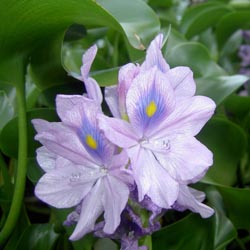
  • Floaters: Water Lettuce (Pistia stratiotes), Water Hyacinth (Eichhornia crassipes), Frogbit (Hydrocharis morsus-ranae) and Miniature Water Lilies (Nymphae spp.). These plants provide habitat and will shade the pond water surface to reduce the production of algae.
  • Submerged Oxygenators: Anacharis (Elodea Canadensis), Water Buttercup (Ranunculus aquatilis) and Fanwort (Cambomba caroliniana) are great choices that help maintain water clarity by consuming excess nutrients that contribute to the production of algae. These plants can reproduce rapidly, but they are easily controlled in the small pond by simply removing surplus growth.
  • Marginal Plants: Sweet Flag (Acorus spp.), Dwarf Cattail (Typha minima), Dwarf Papyrus (Cyperus profiler), Iris (Iris pseudacorus) and Camelion plant (Houttuynia cordata). Placed at a pond’s edge, these marginal aquatic plants add color, height and variation to the water garden. They also provide cover, habitat and oxygen.

Be careful not overwhelm your container water garden with too many plants or it will be difficult to maintain a natural balance.

Fish and Other Pond Life

Different types of wildlife will love to be a part of even a small water garden.

  • Fish: Fish create additional interest to a water garden by adding sparkle and movement. Good choices for a small water garden are: Goldfish, Red Comets, Calico Fantails and Shubunkins. Do not overstock your water feature. As a rule of thumb, each inch of fish should have 6 square inches to one square foot of water.
  • Snails: Slow and steady, snails can help keep your water garden clean and healthy. Japanese Trapdoor Snails eat algae stuck to the sides of the pond and will consume excess fish food.
  • Tadpoles and Frogs: Tadpoles will morph into amusing frogs. Tadpoles eat algae and add motion and interest to the pond, especially for children. Frogs will lend sound to the garden and aid in insect control.

Water Garden Container Care

Several common problems can occur even in small water gardens, but they are easily controlled and you can keep your water garden looking beautiful.

  • Algae: Despite all your planning, it is perfectly natural for your pond to turn green at first. Once the plants get to work, the green will fade. If you find that you require a little extra help in algae control, try Microbe-Lift or Barley Straw pellets, both are natural algae controls. Adding an extra snail or other algae-eater to the pond can also help control the color naturally.
  • Mosquitoes: Mosquitoes may be managed in several ways. Adding water movement to the pond with a pump and small fountain will keep the insects from breeding or settling on the water. Adding BT (Bacillus thuringiensis) to the water in the form of Mosquito Dunks will also discourage the insects. Incorporate small fish into your pond garden, they eat mosquito larvae. Other mosquito predators include: dragonflies, bats, tadpoles and frogs, all of which can be a part of your backyard ecosystem.

Maintenance

Check the pond weekly. You need to be observant to animal activity and any abnormal growths or marks. Inspect plants and fish for health, insects or disease. Clean up any dead or yellowing foliage. Replace evaporated water as necessary. If your water contains chlorine or other chemicals, be sure they are removed before adding this water to your pond. Chlorine is toxic to fish and beneficial bacteria. Chlorine will dissipate after a few days if it is exposed to air, but do not add fish or plants until after this is accomplished.

With just a little thoughtful planning, the right plants and proper care, you can have a small water garden to brighten up a small space in your yard.

WaterFeature_3WaterFeature_4

WaterFeature_1

WaterFeature_2

Shrubs for Summer Color

Many gardeners assume that the brightest flowers are only seen in spring, but there are many stunning shrubs that have great color all through the summer. Some feature outstanding blooms while others have equally showy foliage and can brighten up any yard. But which will look best in your yard?

Top Summer Color Shrubs

There are a number of tried-and-true summer-flowering shrubs that never fail to be impressive. Consider these favorites to enhance your landscape all summer long.

  • Hydrangea
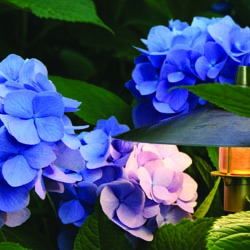
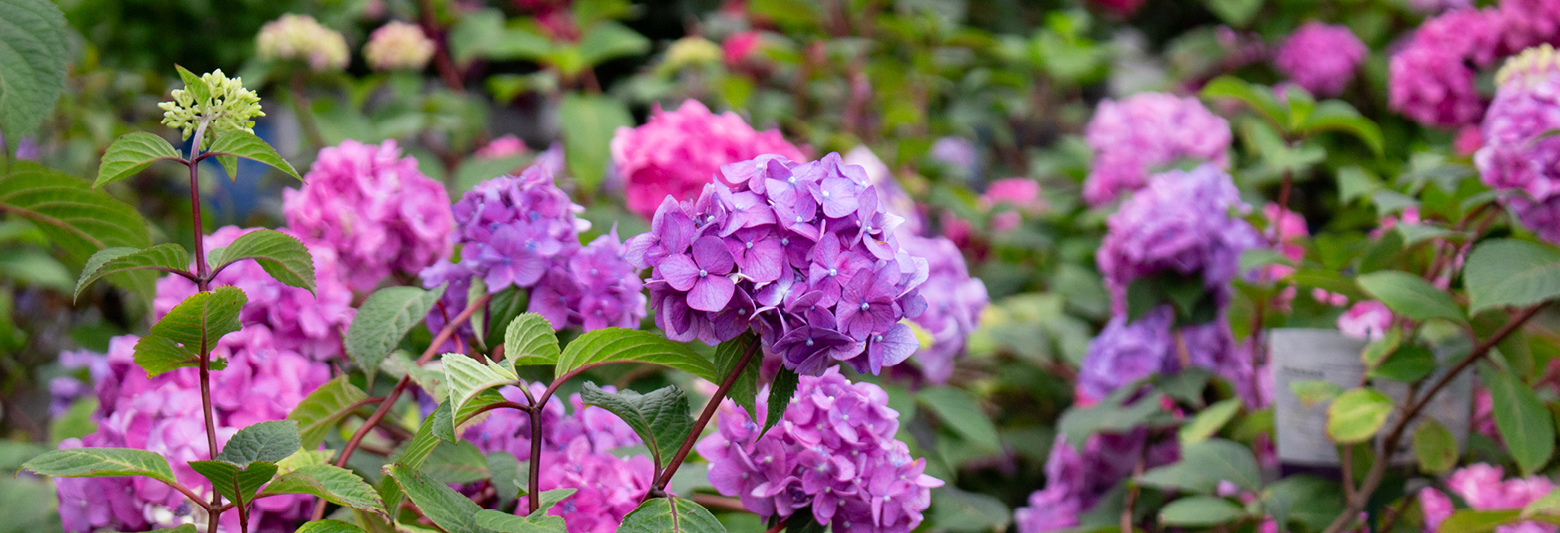
    This very popular mounding shrub is an old-fashioned favorite, but it doesn’t have to be just your grandmother’s shrub – there are hydrangeas for every situation and taste. Flowers appear in early summer and can last for several weeks. Choose from pink, blue (use an acidic fertilizer to maintain this unusual color) or white blooms. Large flower heads great for drying or make outstanding arrangements and bouquets when cut. These shrubs do best in light shade or sun. One of the easiest hydrangeas to grow is the native American oak-leafed hydrangea has lobed leaves with fragrant, conical-shaped flower heads.
  • Butterfly Bush (Buddleia)
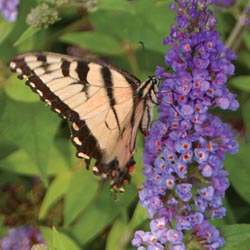
    This dramatic shrub is truly a butterfly magnet, and hummingbirds love it as well. One of the most fragrant flowering shrubs, butterfly bush blooms from early summer to autumn frost, and different varieties can thrive in a wide range of growing zones. The flowers can be pink, purple, blue, yellow or white, and often feature elegant spiked panicles, arching branches and interesting foliage. These shrubs do best in full sun and come in different sizes to suit different landscaping areas.
  • Spirea
    A generally low-maintenance choice, this shrub features golden yellow to lime-colored foliage all summer with pink or lavender blooms in late spring through summer. Goldmound, Gold Flame and Anthony Waterer are all great cultivars and easy care shrubs growing to about 2-4’ by 3-5’. This truly is the perfect shrub to use anywhere in the landscape, and it can tolerate sun to part shade growing conditions.
  • Rose of Sharon (Hibiscus)
    This is one of the showiest plants of the summer, and Rose of Sharon is also one of the easiest to grow. Dense growing and upright when young these shrubs will spread with age, so take care to plant them in appropriate spaces to avoid overcrowding. The dark green foliage contrasts nicely with large, showy flowers that can be up to 4” across. Flowers open in July and will continue blooming through late summer and into fall. Flowers are sterile, eliminating seed problems. This shrub is ideal to plant as a screen, hedge or focal point in full sun.
  • Blue Mist Spirea (Caryopteris)
    This shrub is a great plant for late summer color with bursts of purple-blue flowers just when many other plants are growing dull. Its low-growing, mounding habit reaches 2-3’ wide by 2-3’ tall. Blue Mist Spirea is easy to grow and can tolerate some neglect. It should be planted in full sun, and will bloom from summer to fall.

With any of these shrubs in your yard, your summer landscape can be just as colorful and eye-catching as any spring flowers or autumn foliage.

summershrub2

summershrub3

summershrub1

Think Outside the Window Box

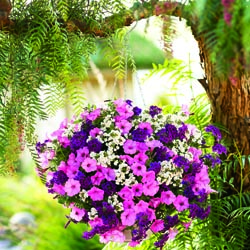
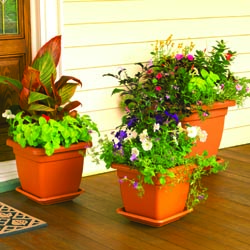
Do you want to add more plants to your yard but think you’re out of space for any more gardening? No matter how large or small your outdoor living area, no matter what types of plants you favor, you can always find the space for a new garden when it’s housed in a container – and that container doesn’t have to be the same old window box or boring planter.

Whether you choose to feature your container gardening efforts sitting on the floor, deck, stairs, path or patio, or you prefer a delicate garden suspended in a basket from an arbor, pergola, archway or hook, we’ve got the container selections that will suit your taste and your lifestyle. Not sure what your preferences are? We can help you discover you best container garden design look! Choose from our great selection of…

  • Hanging Baskets – Choose from willow, moss, wire, cocoa, resin wicker weave or rope weave baskets in different sizes, colors and styles. We also carry self-watering hanging planters and pots in several different sizes, colors and designs to suit your needs and style preferences, and to blend well into your other garden décor and accents.
  • Pots – Shop our extensive line of hand-crafted and manufactured pottery from around the world – Italy, Malaysia, China, etc. – with unique and stunning designs and colors. Choose from a selection of clay, plastic, fiberglass, cement, tin or resin pots in various themes as well as designer and lightweight insulating pottery.
  • Planters – Choose from our lined hayracks, cradle planters (also lined), railing, fence and deck planters as well as pot trellises and obelisks to add interesting structure and layers to different containers in your yard. Many different sizes are available to suit all your planting needs.
  • Accessories – To coordinate your décor efforts even among different pots or planters, we have saucers, caddies, plant stands and brackets, hangers, chains and s-hooks for both indoor and outdoor use so your plants are always displayed to their best advantage. Not sure what you need to give your planter the best support? We’ll help you choose the smartest and safest option.

Stop by and take a look for yourself – we’re sure that you will find a container that holds your interest as well as your plants. And, of course, we also carry window boxes in different sizes, styles and designs, if you still prefer that traditional, classic look!

AA014569

thinkoutside3

thinkoutside1

The Cotinus Craze

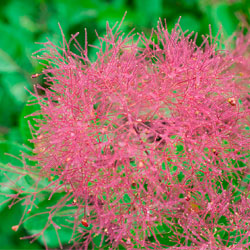
Smoketree, the common name for the genus Cotinus, aptly describes the hazy, smoky look of the flowers sported by this fabulous plant. Best described as a deciduous large shrub or small tree, Cotinus boasts species with varying heights, unique summer flowers, outstanding fall color and low maintenance requirements, all features that can make it an excellent addition to your landscape.

Cotinus Care

Thriving in full sun, the smoketree isn’t particular about soil conditions; it is drought tolerant and virtually disease and pest-free. Cotinus does, however, require excellent drainage, and it is important that the soil not be soggy or compacted which will choke off roots. Although this plant may be pruned for size it is important to remember that the flowers appear in the late spring on old wood, therefore, fall or early spring pruning will eliminate the smoky flowers. When pruning is required to maintain size or shape, consider coppicing (cutting entire bush down to 12″ tall in early spring) every other year. This allows you to enjoy the flowers on alternate years but keep the plant to a manageable size.

Cotinus Varieties

We recommend two species and various varieties of Cotinus because of their sizes, colors and landscape beauty. The large C. obovatus, American Smoketree, is native to the eastern United States. A large specimen grows to 20′ tall and wide, with large bluish dark green leaves. In the fall, the leaves turn bright yellow, orange and bronzed red.

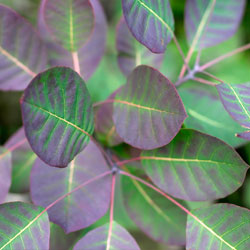
The smaller C. coggygria generally grows to 15-20′. The flower puffs of the purple-leaved cultivars ‘Purpureaus’, ‘Royal Purple’, ‘Norcutt’s Variety’ and ‘Velvet Cloak’ appear even stronger purple than the dramatic leaves. Especially when positioned against a light colored fence or wall, the purples seem to glow.

On the other hand, ‘Golden Spirit’, growing to only 7′ tall with lime green spring leaves, stands out against dark walls and fences, whether in the ground or in a container. ‘Pink Champagne’ pairs tannish-pink flower puffs with green leaves for a 10′ tall and wide, clean, contemporary look.

One of our favorites, ‘Grace’, is a hybrid of the two species. Growing to 15′ tall and wide, the purple leaves create a beautiful backdrop to large, deep pink smoke puffs. Autumn foliage colors include orange and a stunning red/purple/bronze.

Choosing Your Cotinus

With so many varieties of this stunning plant available, it can be difficult to choose your best Cotinus. Check the specific growing conditions for each variety, as well as its mature size, when selecting one for your landscape. Care for it meticulously until established, and you’ll be rewarded with many years of dramatic beauty to enjoy.

continus-1continus-2

Blossom End Rot

Nothing is more disheartening than grabbing a beautiful tomato only to find the entire bottom is soft, black and rotten. Blossom end rot (BER) affects tomatoes, peppers, eggplant, squash and melons. Caused by insufficient calcium and uneven water during the rapid growth of the plant and its fruit, BER is easily avoidable with the proper precautions.

All vegetables need calcium for healthy development. When tomatoes, peppers, melons and eggplant can’t get enough, the tissues on the blossom end of the fruit break down. By testing your soil to determine its pH and calcium content, regularly watering and curbing fertilizer use, your susceptible veggies should be free of BER.

The best prevention occurs before planting. The soil pH determines the amount of calcium available to a plant. At lower pH levels, less calcium is available for the plant to absorb because it becomes chemically tied up in the soil. Most vegetables grow well in soils with a pH of 6.2-6.8. However, vegetables susceptible to BER require a pH of 6.5-6.8, where more calcium is available and it can be more easily absorbed, especially during rapid growth and fruiting periods. If the pH is lower than 6.5, the crop is likely to develop BER. This can also occur when the pH is correct, but the soil contains an insufficient amount of calcium.

Water fluctuations and excessive fertilizer also affect nutrient absorption. A plant requires water to absorb nutrients. If no water is present, no nutrients can be absorbed, and in addition to blossom end rot, plants may be small and weak as well as more susceptible to other pests, diseases and deficiencies.

Additionally, too much fertilizer can cause a plant to grow so quickly that the nutrient uptake cannot meet the demands of growth, leading to BER. In these cases, the plants grow so rapidly and develop produce so quickly that there isn’t time for the proper nutrient balance to be absorbed, including the right amount of calcium. Because of this accelerated growth and insufficient nutrition for the growth pace, plants will be more susceptible to blossom end rot.

Unfortunately, simply adding calcium to the soil will not stop BER this year, but it can help your soil become better conditioned for next year. However, we do carry several products to help with this year’s crop as well. Easy-to-use calcium sprays can save much of this year’s crop of tomatoes or other vulnerable produce. Come on in and our knowledgeable staff will help you find the best product for your situation, as well as for tips on how to improve your soil’s pH levels, calcium content, moisture retention and overall nutrition so blossom end rot is never a problem in your garden again.

end-rot-2

end-rot

Small Shrubs for the Perennial Border

Adding structure and an aspect of year-round permanence to any yard, small shrubs are excellent for enhancing the perennial border. Thought of as the spine and bones of good landscaping, small shrubs hold the soft body of flowers together and add consistency between areas. Well-chosen selections integrate with perennials to add interest for more than just one season. Not only do they add support for perennials in late summer but also they provide definition to the bed throughout the year. Though shrubs take longer to reach maturity, their outstanding foliage, lovely flowers and attractive shapes and forms add to the beauty of the garden.

Choose Shrubs That Promise Year-Long Interest

The ideal shrub for the mixed border has outstanding foliage – deep green, purple, gold, silver, or even variegated. Its leaves may be glossy, soft or even fuzzy to touch. Colorful veins or other variations may mark its foliage to seize your interest throughout the seasons. And, certainly, the ideal shrub has flowers. Late-blooming flowers liven up the border during the tired end-of-summer days, while early-blooming varieties add excitement to a garden just bursting into spring. You’ll also want to take into account flower color when working shrubs into a planting scheme. White is a delightful and safe choice because it harmonizes with all other colors. Consider also mellow blues, pinks and other pastel shades to add a peaceful mood to the garden. Bold colors of yellow, orange or red will add a warm, daring feeling and dramatic interest. In fall, colorful leaves cover the ideal shrub before falling to the ground. And in winter, twisted, colorful branches and bright berries provide visual interest even under a layer of frost or snow.

Top Border Shrub Choices

Name Height Interest

Background and Mid-Border Shrubs

Cornus alba cultivars (red twig dogwood)* 8-10 ft. Variegated or golden foliage; red winter branches
Cornus stolonifera cultivars 7-9 ft. Variegated foliage; red or yellow winter branches (red osier dogwood)*
Cotinus coggygria ‘Velvet Cloak’ or ‘Royal Purple’ (Smokebush)* 10-15 ft. Dark purple foliage
Deutzia ‘Mont Rose’ and ‘Magician’ 4-5 ft. and 6-8 ft. Pink spring flowers; graceful, arching habit
Hydrangea cultivars 4-12 ft. Late summer blue, white or pink flowers, variegated or unusual leaves
Viburnum macrocephalum 6-15 ft. White flowers in spring fading to buff, seed heads
Viburnum plicatum var. momentous 5-10 ft. Bright white lace-cap flowers summer, ‘Summer Snowflake’ (doublefile viburnum) through fall
Viburnum sargentii ‘Onondaga’ 5-12 ft. Dark green or maroon-tinged foliage; ‘Susquehanna’ (Sargent viburnum) late spring flowers; bright red winter fruit
Weigela W. florida 4-6 ft. Golden or purple foliage; late spring, ‘White Knight’ and ‘Wine and Roses’ pink or white flowers

Focal Point Shrubs

Berberis thunbergii ‘Helmond Pillar’ 4-5 ft. Upright form; reddish, purple leaves (Japanese barberry)
Buxus sempervirens ‘Graham Blandy’ (boxwood) 4-6 ft. Narrow, upright habit
Buxus microphylla cvs. (littleleaf boxwood) 3-4 ft. Dense, rounded shape
Ilex crenata ‘Sky Pencil’ (Japanese holly) 4 ft. Extremely narrow, columnar form

Front-of-the-Border Shrubs

Berberis thunbergii ‘Atropurpurea Nana’, ‘Aurea’ 1-4 ft. Golden or purple foliage; dense, rounded form and ‘Bagatelle’ (Japanese barberry)
Caryopteris clandonensis ‘Worcester Gold’ 2-4 ft. Golden foliage; late summer lavender flowers (blue mist shrub)
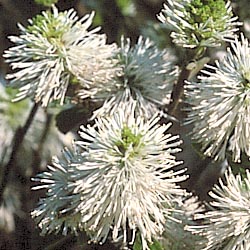
Fothergilla gardenni 2-3 ft. Creamy flowers stick up like bottlebrushes on bare tips in early spring
Hypericum androsaemum ‘Albury Purple’ (tutsan) 2-3 ft. Purple-tinged leaves; yellow summer flowers; red berries
Spiraea japonica (Japanese spiraea) 1-4 ft. Golden foliage; pink spring flowers
Spiraea ‘Goldflame’ 2-3 ft. Pink flowers, red spring leaves tinged with bronze, changing to gold
Symphoricarpos orbiculatus ‘Foliis Variegatis’ 2-5 ft. Yellow-edged variegated leaves (coralberry)

*Prune hard in late winter to control height in mid-border positions.