Monthly Archives: November 2025

Cut Christmas Tree Selection and Care

A fresh cut tree can be a wonderful addition to your holiday décor as well as a treasured Christmas tradition. Unfortunately, with poor care a cut tree can be looking wilted and worn long before December 25, but if you know a few tricks, you can keep your tree looking vibrant and lush throughout the season. Extend the life of your cut tree this Christmas and enjoy the beauty of the season much longer! 

  • In selecting a tree, make sure the “handle” at the bottom is long enough to allow the trunk to fit into your tree stand. Otherwise, it will be necessary to remove large branches near the base, which could ruin its appearance, shape and visual balance.
  • Check the tree’s freshness before your purchase by bending, pinching or flexing needles. They should be somewhat pliable and not fall off easily. Avoid purchasing a tree that is already showing signs of dryness.
  • Make a fresh cut to remove 1/4″ to 1″ of wood from the base of the trunk before putting the tree in the stand. If you use a “center pin” stand, make sure the hole is drilled in the stem after the tree is trimmed.
  • Once home, place the tree in water as soon as possible within 6-8 hours after cutting the trunk. This will help the tree better absorb moisture to keep the needles plump and secure.
  • If needed, trees can be temporarily stored for several days in a cool location, such as a garage, before being taken indoors and decorated. Place the freshly cut trunk in a bucket full of water. The tree may need to be supported to keep it from tipping over.
  • To display the trees indoors, use a stand with an adequate water holding capacity for the tree. As a general rule, stands should provide 1 quart of water per inch of stem diameter.
  • Use a stand that fits your tree. Some stands have circular rings at the top, so the ring must be large enough for the trunk to fit through the hole. Other stands are open, which may allow a greater range in trunk size. Avoid whittling the sides of the trunk down to fit a stand. The outer layers of wood are the most efficient in taking up water and should not be removed.
  • Keep your tree away from sources of heat such as fireplaces, heaters, heating vents and direct sunlight, all of which can make it dry out more quickly. Lowering the room temperature will slow the drying process, resulting in less water consumption each day.
  • Check the stand daily to make sure that the level of water does not go below the base of the tree. With many stands, there can still be water in the stand even though the base of the tree is no longer submerged an unable to absorb water.
  • Apply Wilt-Pruf, an anti-transpirant, to branches to help prevent moisture loss and needle drop. This should be done as quickly as possible before decorating the tree.
  • Do not use additives in the water, including floral preservatives, commercial tree preservatives, molasses, sugar, bleach, soft drinks, aspirin, honey, etc. Clean water is all that is needed to maintain the tree’s freshness.
  • Miniature lights, particularly LEDs and other energy-efficient bulbs, will produce much less heat and reduce drying of the tree. Do not overload the tree with too many lights.
  • Always inspect light sets prior to placing them on the tree. If worn, replace with a new set. And, do not overload electrical circuits, fuses or circuit breakers.
  • Always turn off the lights when leaving the house or when going to bed. Minimize how long the lights are on, such as not leaving the lights on during the day when they are less visible.
  • Monitor the tree for freshness by bending or pinching needles to test their flexibility. After Christmas or if the tree is dry and brittle, remove it from the house.

With just a few common sense steps, you can find a lovely fresh cut tree and keep it beautiful throughout the holiday season.

Time-Saving Tips for the Holidays

With shopping, decorating, baking, cooking, travel, entertaining and more all part of the holidays, it’s a wonder there is any time left over to just enjoy the season. These time-saving tips can help you make the most of every minute without sacrificing the joy and celebration that matters most at this time of year.

  • Start early! You may not enjoy seeing “Christmas Creep” in stores before Halloween, but if you start addressing holiday cards ahead of time, make freezer recipes for holiday meals or try shopping for holiday gifts with Columbus Day, Veteran’s Day and other fall sales, you’ll have far less to do the closer the holidays get.
  • Tabletop topiaries are great for holiday decorating, and need nothing more than a festive bow for instant seasonal appeal. They also make a green and growing addition to your home when you need it most in the late winter months. Pick one up from the nursery for an instant gift – no wrapping needed!
  • Cast stone cherubs and garden sculptures make wonderful holiday decorations set off by greens and berries. When the holidays are over, you don’t need to lug them into storage. You can even change their decorations seasonally to reuse them as fun and whimsical accents throughout the year.
  • Present gifts in reusable gift bags, stockings, baskets, tins and garden totes for easy wrapping job that’s recyclable. For even more flair, use a colorful scarf as an impromptu ribbon, or trim the package with seed packets or small garden tools instead of disposable bows.
  • Start Amaryllis and Paperwhite bulbs now. Use potting soil rather than gravel for longer lasting blooms. Also consider other living holiday gifts, such as fragrant herbs, luxurious poinsettias or even a shaped rosemary plant or miniature Norfolk Island Pine decorated for the season.
  • Float a candle or a sprig of greens in a crystal bowl for an instant elegant center piece. Add more color with marbles or pebbles in the bowl, or choose a bowl with etching or seasonal patterns for subtle flair.
  • Start your holiday baking early and freeze doughs or completed recipes to save time later. Baked goods – cookies, breads and fudges – also make delicious and easy gifts, with no extra time needed for another batch if you’ve doubled the recipe.
  • Keep a few extra wrapped gifts in a handy closet, labeling the contents with Post-It notes so you can quickly choose a gift for an unexpected guest. Easy items to give include warm gloves or socks, fragrant candles, seasonal photo frames, mini tabletop games, tote bags and luxury soaps.
  • Don’t be afraid to delegate! Consider a pot luck holiday dinner, enlist your kids to keep the tree stand full of water, share shopping tasks with a sibling, join a cookie exchange for less stress holiday baking or shop online to have gifts wrapped and delivered right to the recipients.
time-saving-1

time-saving-2

time-saving-3

time-saving-4

Create a Beautiful Tree in 6 Easy Steps

Have you ever wondered how to create that beautiful Christmas tree, the kind featured in photo shoots and magazines? Whether you opt for a live potted tree, a fresh cut pine or an artificial tree you can reuse for several years, the steps to a stunning, artistic tree are the same, and you don’t have to be an interior designer to create a lovely Christmas tree. 

  1. Color
    Pick a theme color or color pair. This may be colors you simply like together, or you could mimic school colors, a favorite sports team or classic holiday pairings like burgundy and gold or blue and silver. Consider your tree theme and choose colors accordingly, such as blue and aqua for a tropical, undersea tree, or white and silver for a winter wonderland tree.
  2. Lights
    Use one strand of 70 to 100 lights for each foot of tree (7 strands for a 7-foot tree). This will be the approximate ratio on a pre-lit artificial tree, or you will need to add lights to a live tree. Spread the strands out evenly, and tuck wires into the tree so they are less visible. White lights or a single color are generally more elegant than multi-colored strands.
  3. Ribbon
    Plan on 40 to 60 yards of ribbon unless the tree is in a corner. The treetop will typically take 10-15 yards of this amount. You can also mix two ribbons for a nice effect, too. Wire-edged ribbon is easier to shape into graceful curves, and a broad ribbon will make a more dramatic impact, particularly on a larger tree. Drape the trailing edges of ribbon down the sides of the tree, either straight toward the ground or in a graceful spiral.
  4. Accents
    Add silk or dried flowers as your next step along with garland. Make sure flowers are placed at different depths within the tree so there is dimension. Holiday flowers such as poinsettias are most popular, but you can opt for different blooms to coordinate with your theme, such as roses for a Victorian tree or tropical flowers for a festive beach-themed tree.
  5. Balls
    Use 6-8 boxes of plain glass ball ornaments, either all the same color or 3-4 boxes each of two coordinating colors. Tuck some of these ornaments deeper within the tree to reflect more light and add depth to your decorating. A medium-size ornament is appropriate, or choose balls of different sizes but in the same plain color and basic shape.
  6. Ornaments
    Add themed ornaments last for that finishing touch and to give your tree some whimsy and pizzazz, but try not to go overboard with quirkiness. If you prefer a simpler, more elegant look, avoid overly themed ornaments but choose simple colored ornaments in different shapes that match your overall color plan, such as using drip, icicle, or star-shaped ornaments to complete the tree.

Voila! You have a Christmas tree that will bring beauty and elegance to your holiday decorating all season long.

create-beautiful-tree

Tools for Holiday Gift Giving

It’s easy to shop for gifts for the gardeners on our holiday list. There are always new tools available for the serious, and not so serious, gardeners in our lives. In fact, there may be too many to pick from, but we can help you narrow down the selection to find the perfect gift.

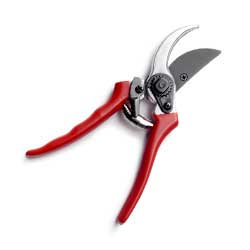
  • Pruners
    Every gardener faces the need to prune or deadhead flowers at some time. From hand pruning a wayward twig to removing a branch 10′ overhead, there is a pruning tool to make any job easier.Because everyone’s hands and hand strengths are different (and some folks are left-handed), hand pruners are the most personal of garden tools. Two well-known companies, Corona and Felco, produce hand pruners and saws. Hand pruners come in two basic styles: by-pass pruners have two sharp blades that pass each other when cutting, while anvil pruners have one sharp blade cutting the material against the other flat blade. Both companies offer several models of these styles to accommodate different pruning needs, sizes of hands, hand strengths and orientations. New ergonomic models optimize hand strength and minimize discomfort.Another option is a pruning saw, which is different from any old saw. A larger sheath model saw makes short work of removing a large branch. A smaller fold-up model is great to have in a gardener’s pocket while making the daily rounds. Different models, with different lengths and teeth sizes, ease sawing effort. Check out our gift shop to see all the options.

    When an overhead branch requires removal, a gardener appreciates a pole pruner. Not only is it a hassle to get out the ladder, it’s dangerous to perform the sawing and pruning motions when balancing. The redesigned Fiskars pole pruners are powerful, with a telescoping pole to 12′ extension. If the branch is too large for the pruner, the detachable saw blade cuts through it. Unlike the old style pole pruners, there are no ropes to pull (and tangle in the tree!). Pruning heads even swivel to get a closer and cleaner cut. The Fiskars pole pruner, or Pruning Stik®, won’t fit in your gardener’s stocking, but it’s certain to be a winner!

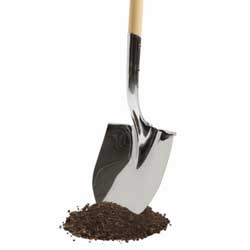
  • Shovels and Spades
    Shovels and spades are other key gardening tools. While many shovel versions exist, the round point shovel is the most common. The heavy-duty blade point pushes through the soil and the rounded blade scoops the soil. Square-edged shovels also scoop soil and other materials in addition to digging but don’t have the point. Spades, basically a smaller version of a shovel, are usually flatter. Most shovels have a rolled lip, or rim, on the top of the blade. This is where the user puts their foot to push the tool into the soil. The larger the rim, the more comfortable for the foot when doing a lot of digging.Better quality shovels and spades are powder coated to prevent rust, are pre-sharpened, and the blade is welded or forged to the shaft. Shafts vary in style and material. Wood, plastic or fiberglass shafts may be straight or end with a handle. A fiberglass shaft lasts longer than wooden shafts and doesn’t require annual maintenance and cleaning. Ergonomic designs reduce the chance of wrist injury. Other shovel/spade specialties include the trenching shovels to dig deeper than the standard 12 inches, border spades and smaller sized round point shovels to dig smaller holes or working around existing landscape. And don’t forget trowels and other hand digging tools. If your gardener has a special digging or scooping need, there’s a shovel or spade for it.
  • Hoes
    Hoes may seem old-fashioned, but there are new designs every gardener can appreciate. Used since ancient times, the hoe performs many functions in the garden depending upon its configuration. The regular hoe’s rectangular shaped blade, positioned at a right angle to the shaft, weeds and shallowly cultivates. The V-shaped version, also called the Warren hoe, has a point to dig furrows for seed planting. The other side closes the furrows after planting. The “weeding” and “action” style hoes make short work of removing weeds.
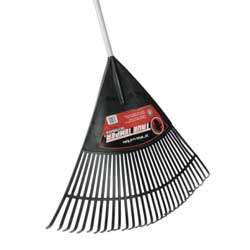
  • Rakes
    A rake is another essential tool. Think of a leaf rake as a large hand – it allows the user to gather a large amount of material such as leaves and debris. Rakes may be metal or plastic, quite large to cover a large area quickly or quite small to get under plants without damage. Rakes are practical and save time and energy. Specialized rakes include the two styles of garden rakes, flat and bow, and thatch rakes to remove thatch from lawns to keep turf lush and thick.

There’s just one problem with giving these larger tools as gifts – they’re very difficult to wrap!